
Tag: dependent origination
Dependent Origination serves as the core map for understanding how suffering arises in the mind. In the Metta Vipassana point of view, this process reveals the precise link where craving enters your experience. You observe how a feeling triggers a reaction of “tension and tightness” in the head and body. This chain of events shows that all phenomena arise based on specific conditions rather than a permanent self.
By applying the 6Rs during meditation, you learn to break this chain at the moment of craving. This practice allows you to see the impersonal nature of thoughts and feelings as they appear. You realize that releasing the tension stops the entire cycle of suffering from continuing. This deep insight transforms your retreat into a practical laboratory for mental liberation.
-

Bhante Vimalaramsi India Journey: How the Dhamma Spread Across the Country
Read more: Bhante Vimalaramsi India Journey: How the Dhamma Spread Across the CountryRead the full story by Bhante Dhammagavesi on how Bhante Vimalaramsi came to India. Discover how Sister Khema, dental trips, Ayurveda, and student efforts started TWIM retreats in Maharashtra and Himachal Pradesh.
-
Full Moon Day Group Sitting: 30 May 2026 – Too Much Effort Can Hold You Back
Read more: Full Moon Day Group Sitting: 30 May 2026 – Too Much Effort Can Hold You BackDiscover the profound teaching of the Sona Sutta on finding true balance in meditation. Learn why too much effort holds you back and how to tune your mind for awakening.
-
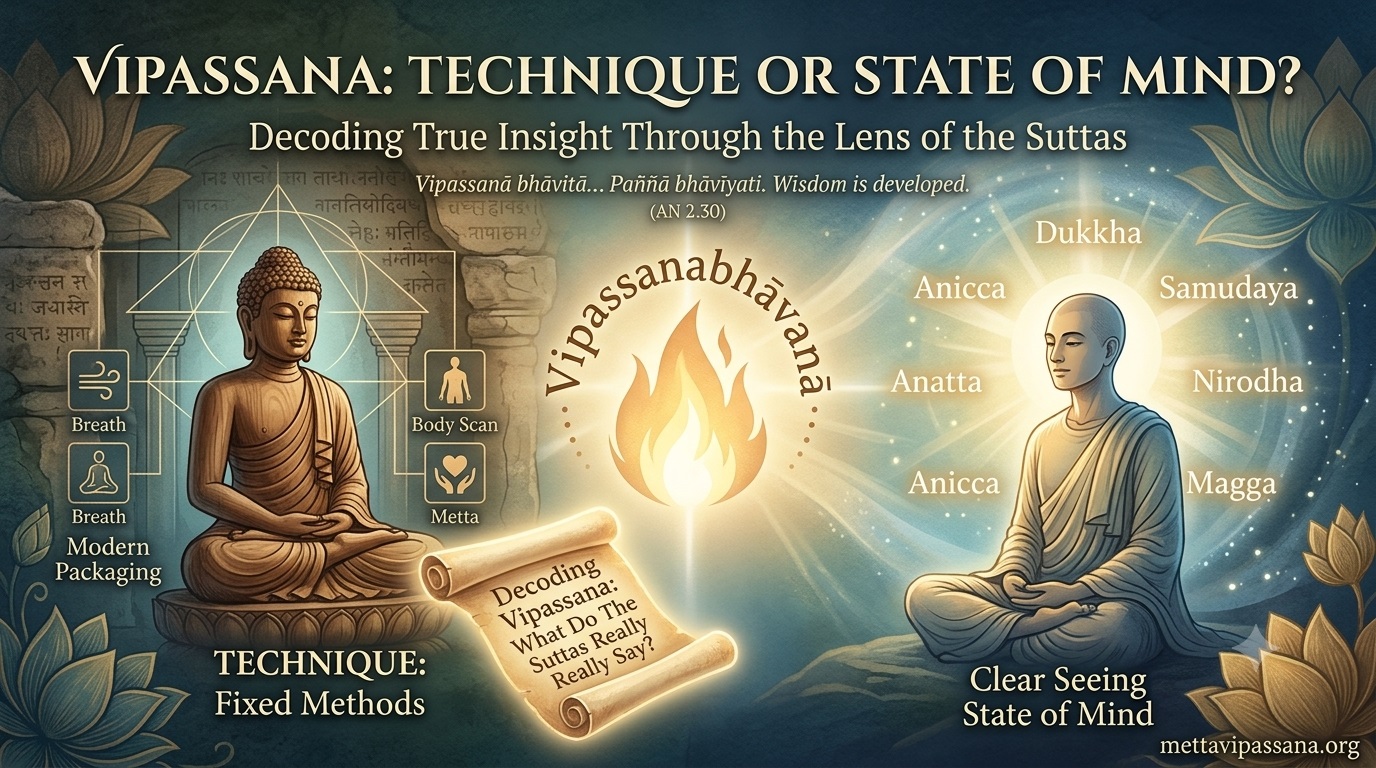
Is Vipassana a Technique or a State of Mind? Understanding the True Vipassana Practice and Meaning
Read more: Is Vipassana a Technique or a State of Mind? Understanding the True Vipassana Practice and MeaningMany people think Vipassana is a meditation technique. But is that how the Buddha described it? By returning to the original Suttas, we discover that Vipassana is not a technique but a cultivated state of insight. This article explores the true Vipassana practice and meaning, the role of Anapanasati and Metta, and why understanding these…
-
The Dakkhinavibhanga Sutta: Unlocking the Full Potential of Generosity
Read more: The Dakkhinavibhanga Sutta: Unlocking the Full Potential of GenerosityYesterday, on the sacred full moon of Buddha Vaishakha, our global community gathered to reflect on the core pillars of the Dhamma. As part of our celebrations, we hosted a special session sharing the profound wisdom of Bhante Dhammagavesi’s teachings
-
How Meta Vipassana Meditation Can Truly Change Your Stressful Modern Life
Read more: How Meta Vipassana Meditation Can Truly Change Your Stressful Modern LifeStruggling with stress and traditional meditation? Learn how Meta Vipassana meditation blends loving-kindness with ancient wisdom to bring lasting joy and mental clarity into your busy daily life.
-
Full Moon Day Group Sitting: 1 May 2026
Read more: Full Moon Day Group Sitting: 1 May 2026A reflection on the Full Moon day group sitting held on 1 May 2026. Learn how Ven. Bhante Dhammagavesi explains the path to liberation using the “Ocean and Island” metaphor.
-
Full Moon Day Uposatha April 2026
Read more: Full Moon Day Uposatha April 2026Why is the Full Moon so significant in the Buddha’s teachings? Explore our summary of the recent Zoom discourse with Bhante Dhammagavesi as he explains the Uposatha tradition and how a single day of practice can transform your life.
-

Overcoming the Fear of Loss through Meditation: A Dhamma Reflection
Read more: Overcoming the Fear of Loss through Meditation: A Dhamma ReflectionWhen a family member falls ill, even a seasoned meditator can feel the sudden sting of fear and the weight of “what ifs.” In this heartfelt reflection, Sindhu Dhondi shares how a moment of deep personal vulnerability during a retreat led to a breakthrough insight. By combining Metta (loving-kindness) with the teachings of the Samyutta…
-

Rediscovering the Satipatthana Sutta with Metta Vipassana
Read more: Rediscovering the Satipatthana Sutta with Metta VipassanaMost modern Vipassana traditions focus heavily on concentration, but they often skip a crucial instruction from the Buddha: “Tranquilizing the bodily formation.” In this exploration of the Satipatthana Sutta, we dive into the teachings of Bhante Vimalaramsi to uncover how a simple smile and the “Relax” step can break the chain of craving and lead…
-

Day 6: Mental Proliferation – Kalimpong ’25
Read more: Day 6: Mental Proliferation – Kalimpong ’25Day 6 of the Kalimpong Retreat explores MN 18, the Honey Ball Sutta, revealing how a single thought can spiral into a mental tornado — and how recognizing this process is the key to freedom.