
How to Know People as They Truly Are: Wisdom from the Thāna Sutta
Have you ever trusted someone completely, only to discover their true colors when life got difficult?
In our fast-paced modern world, we rush to evaluate people. We judge someone from a podcast thumbnail, a polished social media post, or an attractive public mask. But appearances are easy to fake.
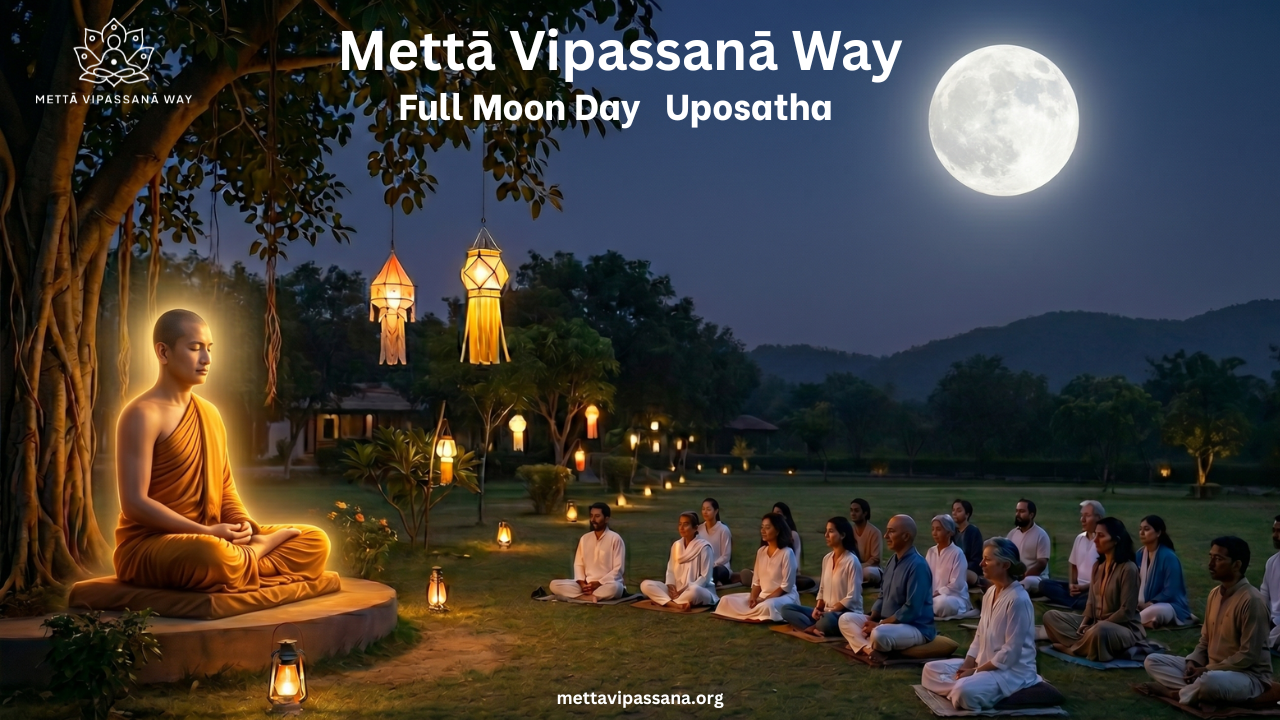
During the Full Moon Uposatha Dhamma talk, Bhante Dhammagavesi addressed this exact dilemma. Drawing directly from the Thāna Sutta (Aṅguttara Nikāya 4.192), Bhante shared the Buddha’s practical guidelines for understanding human character. The Buddha taught that we can know four key facts about a person only through four specific tests.
Crucially, the Buddha laid down three non-negotiable rules for this observation:
- You can know them only after a long time, not casually.
- You must be attentive, not inattentive.
- You must observe with wisdom, not through personal bias.
Here is how the Buddha taught us to understand people—and how we can use these same principles as a mirror for our own spiritual growth.
1. Living Together Reveals Moral Virtue (Sīla)
Anyone can look calm and virtuous for an hour.
Bhante compared this to modern reality shows like Big Brother. When contestants first enter the house, they remain polite and well-mannered because they know the cameras are rolling. But nobody can sustain an artificial mask forever. Once they get used to the cameras, their unwholesome tendencies erupt—anger, greed, and spite surface naturally.
To know a person’s ethical conduct (Sīla), you must live alongside them over an extended period. Only sustained companionship reveals whether their conduct is pure and unbroken or blemished and hypocritical.
2. Dealing with People Reveals Inner Integrity
How does someone treat those who cannot help them?
Integrity becomes visible when a person conducts business and everyday interactions. A person lacking integrity shifts their behavior based on status. They speak softly to a wealthy patron or a senior boss but behave rudely toward a poor person, an employee, or a restaurant waiter.
Bhante noted that a person with genuine integrity treats everyone with equal respect. Whether interacting with one person, a group, an influential executive, or a humble server, their fairness and courtesy never waver.
3. Misfortune Reveals Fortitude and Emotional Strength
It is easy to smile when life gives you success, praise, and comfort. But what happens when things go wrong?
The Buddha explained that the world revolves around Eight Worldly Conditions (Aṭṭha Lokadhamma):
- Gain and Loss
- Fame and Disrepute
- Praise and Blame
- Pleasure and Pain
When an untrained person faces sudden loss of wealth, health, or loved ones, they collapse into grief, weeping, beating their breast in confusion.
In contrast, someone with spiritual fortitude reflects wisely: “The world is impermanent. Ups and downs belong to the very nature of human life.”
Bhante recalled a simple incident from his lay years in Hawaii. While he was working at a restaurant, someone tossed a lit cigarette into a trash bin, sparking a fire. Customers panicked; some screamed, while others froze. Instead of getting overwhelmed, Bhante calmly picked up a pitcher of water and put the fire out. Fortitude means staying grounded and acting with calm awareness during a crisis.
4. Conversation Reveals Wisdom
Social media profiles often showcase material prestige—airport lounge check-ins, luxury meals, and name-dropping. But what does a person talk about when you sit down for a real conversation?
The Buddha used a vivid nature simile:
- If you stand on the bank of a pond, a tiny fish leaves only tiny bubbles and weak ripples on the surface.
- A great, deep fish creates a powerful, rolling swell when it rises.
An unwise person converses superficially. They focus only on worldly gossip, shallow gains, and arguments. A wise person speaks on subjects that are peaceful, subtle, deep, and grounded in truth. When discussing the Dhamma, they explain, analyze, and clarify the teachings with genuine depth and clarity.
The Dhamma Gives Processes, Not Magic Mantras
Bhante shared an insightful interaction with a retired IPS officer who attended a retreat. The officer kept demanding, “Bhante, I have this problem. Give me an immediate solution!”
Many people treat spirituality like a talisman or a magic pill. They want someone else to solve their problems without doing the internal work.
As Bhante emphasized, the Buddha does not hand out quick shortcuts. The Buddha teaches processes. Saṃsāra is an ongoing flow of conditions. You must observe your mind, cultivate wisdom, and take personal responsibility for your own purification.
Practical Daily Life Practice: The Metta Vipassana Way
Rather than using these four facts solely to judge others, turn them inward as a tool for self-reflection.
When daily life throws an unexpected disruption your way—like a sudden power cut stopping your ceiling fan on a hot afternoon or someone criticizing you unfairly—notice the immediate emotional reaction.
Instead of falling into agitation, apply the 6Rs of Metta Vipassana:
- Recognize: Notice that mental tension, irritation, or sorrow has arisen in the mind.
- Release: Gently let go of the angry or complaining thought. Do not fight it; allow it to be without clinging.
- Relax: Release the physical tightness and tension in your head, chest, and body. Calm the mental and physical formations.
- Resmile: Bring a gentle smile to your lips and mind to restore lightness and warmth.
- Return: Gently redirect your attention back to your meditation object or radiate loving-kindness (Mettā) to yourself and those around you.
- Repeat: Stay watchful and repeat the process whenever the mind gets hooked.
By practicing the 6Rs, you step out of the grip of the Eight Worldly Conditions. You stop expecting the world to be permanent or perfect. Gradually, you cultivate unbroken virtue, deep integrity, unshakeable fortitude, and true wisdom in every step of daily life.


So beautifully said. During deep meditation memories pop up – unsettling / unnerving. There are times when one can watch…